The Death of Romance
“The one in my heart, with a smiling face, once brought me spring light in late autumn. The one in my heart, full of treasures, can give me the sun in the dark night.”
On Sunday evening, she opened her diary and wrote, “Romance is dead”
She was reminiscing about a bygone petite bourgeoisie lifestyle—buying fresh flowers every week, having three nights for movies, playing guitar, and singing.
Now, everything has fallen asleep. Those vivid memories are sealed in jars with tears and blood, buried underground.
Romance is dead, and it is not a person or a quarter-century that has died—how can time die? It is merely worn away mercilessly until the end of the world, where dry bones offer her a rose and greet her with a smile: Hello, we meet again.
She wanted to recall memories, so she started playing old songs. Her emotions swelled, and she hastily pressed the pause button.
Those passionate, sincere, dry feelings died one night, a night that was damp, noisy, and cowardly. Since then, she no longer liked the smell of rain and began to harbor many fears, the kind that could abruptly end a smile.
Romance is dead; love has become replaceable like a bowl of instant noodles, and a lifelong commitment is just a piece of paper. At this moment, that paper seems too thin; it cannot bear her weight. She tells herself: You must love universally, only universal love.
Love many people. Don’t love one specific person anymore.
So, the people she loved were broken down into atoms, scattered, and then reassembled into every part of her life—seventeen, twenty, twenty-three, twenty-five.
The young life, because of too much universal love, became frivolous, became boring, became predictable.
What is romance? She told him: Last night, I saw the northern light again and had a bowl of ramen under it. He said: Sounds romantic.
She said: Is this romance?
At that moment, she missed many people.
She hated the universe’s indifference; that omnipotent universe was so reckless. It made people endure the most painful suffering, humble as dust, yet able to get up nonchalantly, crawling and stooping.
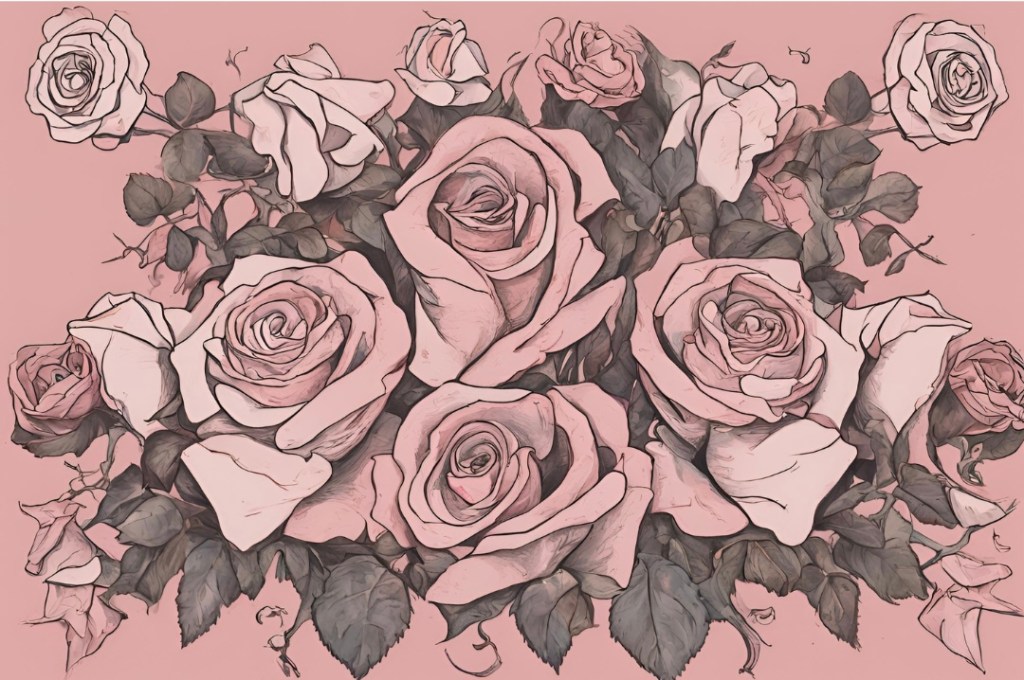
Later, she no longer liked roses, just because she could imagine them withering when they were in full bloom—dry, fragile, like dust. She thought the best ending for a rose was to be eaten.
Be a hippie of time, sneer at its passing.
“The one in my heart, don’t be sad. May your smile remain forever. May your smile remain forever.”
2024-05-17
 Reading Mentorship Navigator Program
Leave a comment